
The future of business automation isn’t about giving AI more freedom. It’s about giving AI better tools.
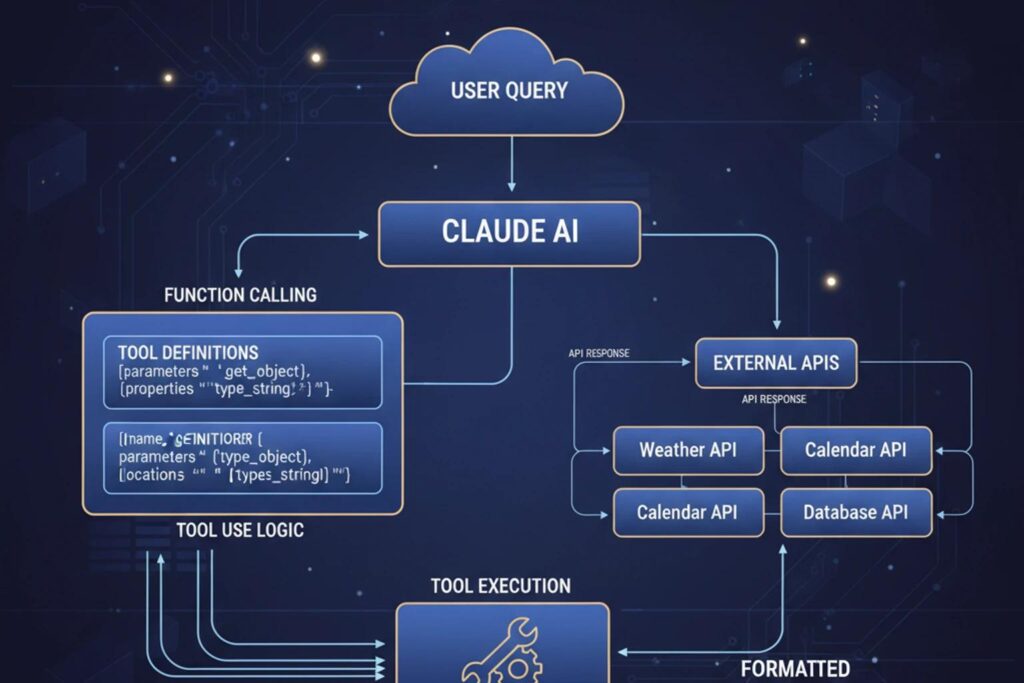
Artificial intelligence is becoming a major part of how businesses operate. Everywhere you look, companies are introducing AI assistants, autonomous agents, and intelligent workflows designed to make their operations faster and more efficient.
But I think we’re approaching this from the wrong direction.
We’re so focused on making AI smarter that we’re overlooking something fundamental.
What happens when the information we’re feeding it is wrong? What happens when the processes we’re asking it to execute aren’t properly defined? And why are we asking AI to figure out how to accomplish the same task every single time?
The problem isn’t necessarily AI itself. It’s how we’re implementing it.
AI should not be used simply for the sake of having AI.
It should be used to solve actual problems, improve existing processes, and help businesses accomplish more with fewer resources.
And sometimes the best way to accomplish that is to give AI less responsibility, not more.
The Smarter the AI, the Bigger the Mess?
The following illustration makes an interesting point about something I believe businesses are overlooking.
The more sophisticated our AI systems become, the more damage they can potentially cause when they’re operating on bad information.
Machine learning can identify patterns in incorrect information. Generative AI can produce convincing explanations based on inaccurate assumptions. Agentic AI introduces another level of complexity because these systems can actually take action.
Now, I wouldn’t say that every AI system automatically makes bad information worse. Properly designed systems can detect inconsistencies and help identify errors.
But the underlying warning is legitimate.
If your business has disorganized information, inconsistent procedures, and poorly defined responsibilities, introducing autonomous AI can amplify those problems.
Imagine an employee who has been trained incorrectly.
Now imagine that employee can work around the clock, access multiple business systems, and execute hundreds of tasks without supervision.
That’s essentially the risk we’re introducing when we give AI unrestricted access to poorly structured business operations.
The solution isn’t necessarily a better AI model.
It’s better infrastructure.
Stop Asking AI to Reinvent the Wheel
Here’s where I think businesses need to change their approach.
Let’s say you operate a property management company.
Every month, your employees need to generate financial reports, organize documents, review tenant information, and distribute communications.
You decide to introduce an AI agent to handle these responsibilities.
The obvious approach is to give the agent access to your systems and tell it what you want.
“Generate this month’s financial reports.”
The AI then needs to determine where the information is located, how to retrieve it, which calculations to perform, how to format the documents, and where to save everything.
And the next time you make that request?
Depending on the system, it may need to reason through much of that process again.
Perhaps it chooses a different method. Perhaps it overlooks something. Perhaps it produces an entirely different format.
You’re introducing unnecessary variability into a process that should be consistent.
Why?
Because you’re asking AI to figure out how to do something that could have been programmed once.
That’s not an efficient use of artificial intelligence.
That’s reinventing the wheel every time you need to drive somewhere.
Build the Tools First. Give AI the Toolbox.
I believe the better approach is to separate intelligence from execution.
Instead of asking AI to invent a process every time, build a collection of reusable algorithms, automations, and functions that perform specific responsibilities.
These tools should be predictable, testable, and repeatable.
Then introduce AI as the interface that determines which tools need to be used and when.
Think about it this way.
You don’t hire an accountant and ask them to invent a new accounting system every time they prepare a financial statement.
You give them established procedures, software, and tools.
Their intelligence is valuable because they understand which tools to use, how to interpret the results, and what actions need to happen next.
AI should operate under a similar philosophy.
The algorithms handle the execution.
The automations handle the repetitive processes.
The AI handles interpretation, coordination, and decisions within clearly defined boundaries.
This approach is consistent with established workflow orchestration patterns, where agents coordinate specialized tools rather than independently performing every operation.
What Does This Look Like in Practice?
Let’s return to our property management example.
Instead of allowing AI to independently construct financial reports, we develop a reusable report-generation system.
That system knows exactly where to retrieve financial information, how to perform calculations, which templates to use, and where completed documents should be stored.
We can then develop additional tools for retrieving tenant information, generating notices, checking outstanding balances, and organizing documents.
Each tool performs a specific responsibility.
Now we introduce the AI agent.
When an employee requests a financial report, the agent doesn’t need to figure out how to create one.
It simply identifies the appropriate tool, supplies the necessary parameters, and executes the established process.
If additional information is required, it can ask for clarification.
If the request involves something outside its permissions, it can escalate the task for approval.
And if something goes wrong, we have a defined process that can be inspected and corrected.
The result is a system that’s easier to maintain, troubleshoot, and expand.
Most importantly, we’re no longer depending entirely on the AI’s reasoning to determine how routine business operations should be performed.
Scalability Comes From Reusability
This is where things become particularly interesting.
Once you’ve built a reliable automation, you can reuse it across multiple applications.
An employee can execute it through a dashboard.
A manager can trigger it through a scheduled process.
An AI agent can execute it through a conversational interface.
All three are using the same underlying functionality.
That means you don’t need to maintain three different methods for accomplishing the same task.
You maintain one.
This also changes how businesses can approach expansion.
As new requirements emerge, you develop additional tools and add them to the existing system.
The AI agent’s capabilities grow because its available toolbox grows.
You aren’t rebuilding your entire infrastructure every time you want to introduce a new feature.
You’re expanding an established ecosystem.
There are potential financial benefits as well.
When repetitive operations are handled through conventional software, businesses can reduce unnecessary AI model calls and repeated reasoning.
Research into reusable agent workflows has demonstrated that consolidating repeated operations into deterministic tools can reduce model usage and improve execution efficiency. The actual savings depend on the system and workload.
But What About the Data?
None of this works properly if the underlying information is unreliable.
Before introducing automation, businesses need to understand how their information is collected, organized, maintained, and validated.
If customer records contain duplicates, financial information is inconsistent, or employees are using conflicting procedures, automation alone isn’t going to solve those problems.
It may simply allow those problems to spread faster.
This is why I believe businesses should approach AI implementation in stages.
First, understand the existing processes.
Identify where information originates, how it moves through the organization, and who is responsible for maintaining it.
Next, eliminate unnecessary steps and standardize repetitive procedures.
Then build reliable automations around those procedures.
Finally, introduce AI where its ability to interpret information, understand requests, and coordinate operations provides meaningful value.
Not every process needs artificial intelligence.
Sometimes a conventional algorithm can accomplish the same task faster, cheaper, and more reliably.
And that’s perfectly fine.
The objective is business efficiency, not maximizing AI involvement.
AI Should Be the Conductor, Not the Entire Orchestra
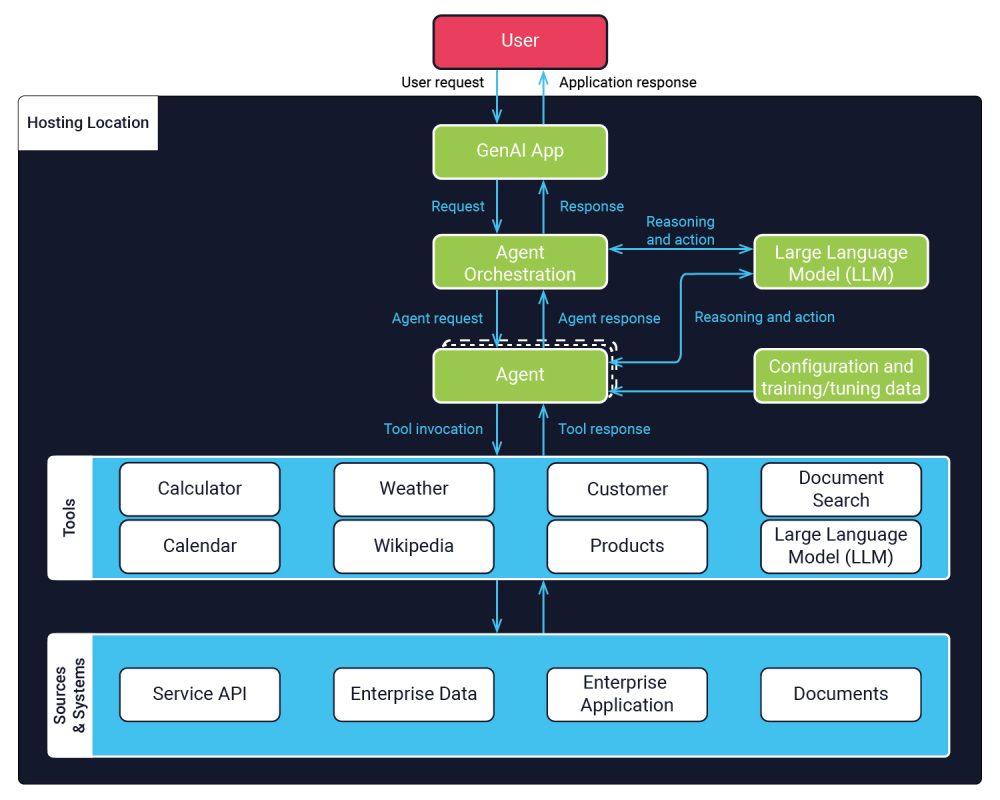
I think this is the best way to describe the philosophy.
An orchestra doesn’t need its conductor to play every instrument.
The conductor needs to understand the composition, coordinate the musicians, and ensure that everyone performs their responsibilities at the appropriate time.
Each musician already knows how to play their instrument.
The conductor brings everything together.
That’s how I envision effective AI systems operating within businesses.
The AI agent acts as the conductor.
Your algorithms, applications, databases, and automations make up the orchestra.
And your established business procedures provide the sheet music.
The AI doesn’t need to recreate the entire operation every time someone makes a request.
It needs to understand the request and coordinate the appropriate resources to accomplish it.
Of course, even this approach requires safeguards. AI can still select the wrong tool, misunderstand a request, or supply incorrect parameters.
That’s why validation, permissions, logging, and human approval remain important.
But these risks become easier to manage when the underlying tools have clearly defined responsibilities and boundaries.
The Future Isn’t Just Artificial Intelligence. It’s Intelligent Infrastructure.
I work with businesses that want to take advantage of emerging technologies, and one thing I’ve come to recognize is that technology alone doesn’t create efficiency.
The way we implement it does.
You can introduce the most advanced AI system available, but if the underlying business operations are disorganized, you’re building intelligence on top of instability.
I’d rather see businesses invest in infrastructure that allows them to grow.
Build systems that are reusable.
Create processes that are consistent.
Develop automations that can be expanded.
Then give artificial intelligence the tools it needs to coordinate those systems effectively.
Because the real opportunity isn’t simply having an AI agent that can do everything.
It’s building a business where everything works together.
And that’s where I believe AI becomes genuinely valuable.
Final Thoughts
We’re entering an era where artificial intelligence will become increasingly integrated into everyday business operations.
But I don’t believe the businesses that succeed will necessarily be the ones that adopt the most AI.
I believe they’ll be the ones that understand where AI belongs.
Sometimes innovation isn’t about creating something entirely new.
Sometimes it’s about taking what already works, making it more efficient, and connecting everything together in a way that allows the entire operation to accomplish more.
That’s the approach I’m taking.
And I think it’s one that more businesses should seriously consider.