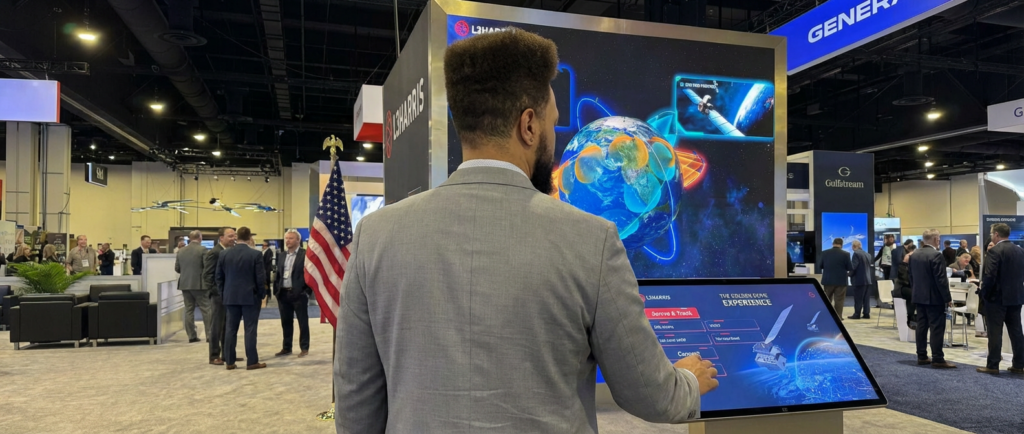
Immersive Marketing

Interactive experiences that connect an audience directly to the thing you sell.

Some products cannot be explained. They have to be experienced.

Immersive marketing is not about headsets. It is about removing the distance between an audience and something complex — using whatever technology actually closes that gap, which is sometimes AR, sometimes a touch table, and sometimes just a browser.

The pitch is not landing

Sales teams are describing something the buyer cannot picture. Engagement drops before the value does.

The product cannot travel

Too large, too costly, too dangerous, or not built yet. It cannot be in the room where it needs to be understood.

Content does not hold attention

Video plays to an empty booth. Interaction is what converts a passer-by into a conversation.

Ways in

The format follows the audience and the room. These are the four routes I most often build — each has its own page.

Walk-up interactive software for booths, lobbies, and briefing centres — built to survive real users, unattended.

Guided demonstrations and repeatable training inside environments that are impractical or unsafe to reproduce.

AR and MR that place your product in the customer’s own space, at true scale, with no freight budget.

Configurators, web AR, and real-time 3D delivered through a link — no app, no headset, no install.

Use cases

The technology is the means. These are the rooms it usually ends up in — where an audience has to understand something quickly and then act on it.

Interactive stations that teach without asking visitors to read a wall — built to run for years under constant public use.

Permanent installations for the room where the big decisions get made, adaptable to whoever is visiting today.

Experiences that give a booth a reason to stop people, and the team a natural way into a real conversation.

Where these projects get built

Immersive work runs through Grey State Development, my immersive marketing and interactive technology company. It exists for medium-sized and enterprise organisations with something genuinely difficult to communicate — and I stay on as strategist and technical lead.

If you are earlier than that, a technical consultation will tell you whether this is worth doing at all.


Let’s scope your project

Tell me what you are trying to show and who needs to understand it. The right technology is the last decision, not the first — and occasionally the answer is that you do not need any of this.

Scroll to Top