
I have worked with this property management client for more than 12 years.
Over that time, our work has covered nearly every part of his businesses’ digital infrastructure. Websites, marketing content, custom applications, IT infrastructure, digital security planning, and the systems that keep his companies operating behind the scenes.
More recently, he developed a fascination with AI.
Like a lot of business owners experimenting with the technology, he started asking a bigger question: How much of my business could this actually help me run?
That experimentation eventually became Yoda, an AI agent he built using OpenClaw.
Then he asked me to step in.
The original request sounded simple: make Yoda generate property management documents on command.
What we ended up building went considerably further.
The Problem Wasn’t the AI
Yoda could already do some impressive things.
The problem was reliability.
When an AI agent is given access to business data and told to figure out how to accomplish a task, there are a lot of decisions happening behind the scenes. It has to interpret the request, determine where the information lives, decide how to retrieve it, manipulate the data correctly, and produce the result.
Then you ask it to do the same thing tomorrow.
It may take a completely different path.
That is acceptable when you are asking an AI to brainstorm ideas. It becomes a serious problem when you are dealing with rent ledgers, tenant records, work orders, leases, legal notices, or financial information.
The client was also seeing another problem: cost.
The more Yoda had to reason through every individual step, the more tokens, calls, and processing it consumed.
I realized that simply connecting more information to the AI wasn’t going to solve either problem.
We needed to stop making the AI figure everything out.
Give the AI Tools, Not Problems to Reinvent
The architecture I settled on was considerably more deterministic.
Instead of telling Yoda:
“Figure out which tenants are delinquent and calculate what they owe.”
We build a tool that already knows exactly how to retrieve and calculate delinquency.
Instead of asking the AI to figure out how to query work orders, we give it a work-order tool.
Instead of letting it determine how a legal notice should be assembled every time, we build a controlled process that gathers the correct information, performs the calculations, and presents the result for human review.
The AI doesn’t need to reinvent the process.
It just needs to know which lever to pull.
That distinction has been one of the most important parts of the entire project.
The algorithms handle repeatable business logic. Yoda handles language, intent, coordination, and interaction.
The result is an AI agent that can do substantially more while requiring substantially less AI reasoning to accomplish it.
Then We Built the Same Command Center for the Humans
Once we started building these tools for Yoda, another opportunity became obvious.
If we were creating a centralized operational layer for the AI, why shouldn’t the employees have access to the same capabilities?
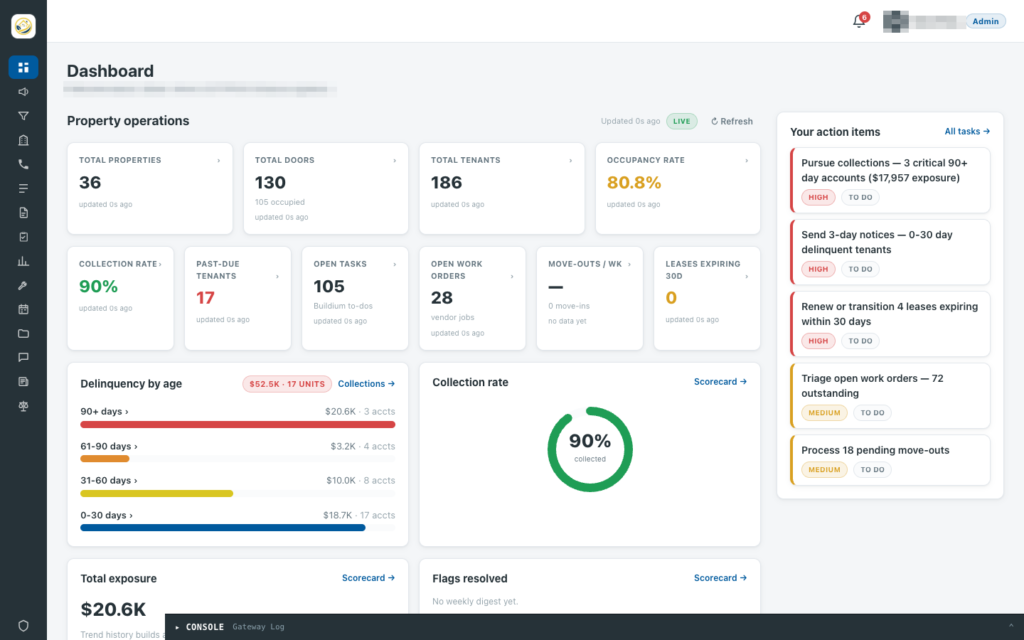
So I built a property management operations dashboard around it.
Instead of employees bouncing between disconnected systems, reports, inboxes, spreadsheets, and individual processes, the dashboard gives the team one place to access company information and the growing collection of tools and automations we’re developing.
Delinquency. Work orders. Vacancies. Lease expirations. Property information. Collections. Calendar events. Calls. Documents.
One interface.
More importantly, the dashboard and Yoda operate on the same underlying systems.
An employee can click a button.
Yoda can pull the same lever programmatically.
That means we are not maintaining one workflow for the AI and another for the staff.
We’re building business capabilities once and exposing them to both.
One Source of Truth
Property management generates an enormous amount of information.
The danger comes when the answer depends on where you looked.
A delinquency report says one thing. A ledger says another. Someone pulled a spreadsheet yesterday. A work order technically exists but was already closed. A lease is month-to-month but gets interpreted as expiring.
Those inconsistencies are exactly where AI can become dangerous.
Before Yoda could become genuinely useful, the data underneath it had to become trustworthy.
We built standardized portfolio queries and business rules so the same questions are answered the same way regardless of whether they come from an employee or the AI.
Who is behind?
How much rent is actually owed?
Which units are vacant?
Which work orders remain open?
Which leases require attention?
Which properties belong to this owner?
One source of truth beats five clever scripts.
Building Collections Around Consistency
Collections became one of the clearest examples of why this architecture matters.
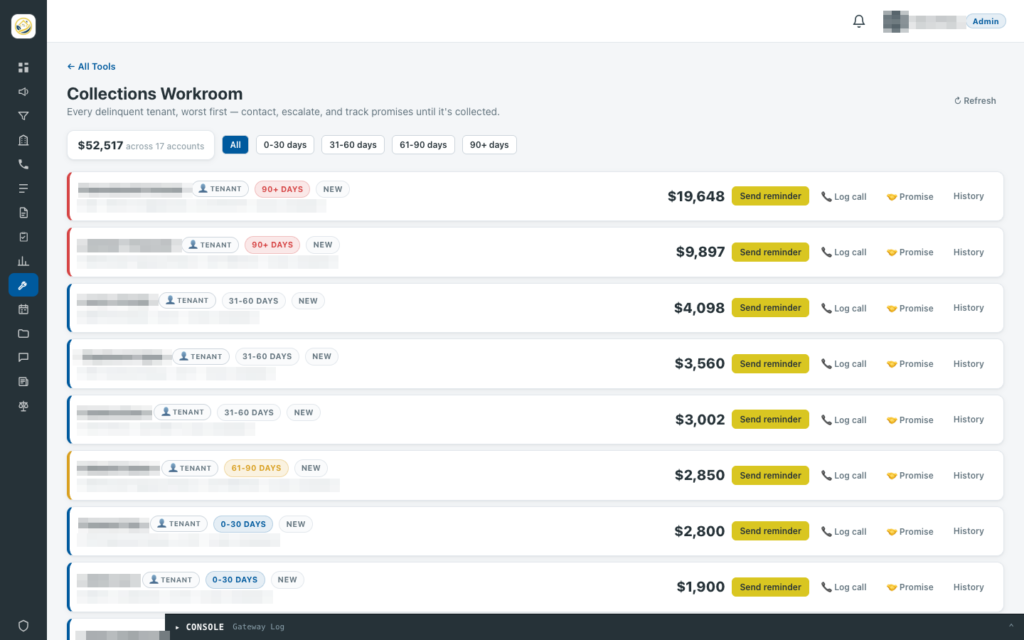
We built a collections workroom that organizes delinquent accounts worst-first and moves each through a defined process.
Reminder. Late notice. Preparation for the next appropriate action.
Calls can be logged. Promises to pay can be recorded. Follow-ups can be scheduled. Employees can immediately see which accounts require attention.
Yoda can interact with those same systems without independently deciding how collections should work.
We also built the system to distinguish between total account balances and actual past-due rent when preparing information for legal notices.
That matters.
A tenant may owe rent, late fees, utilities, or other charges. Those numbers cannot simply be thrown together because an AI saw a balance and assumed it represented rent.
The business logic performs the calculation.
AI assists with the workflow.
A human reviews the legal step.
Turning Conversations Into Work
We applied the same philosophy to phone calls.
Property management employees deal with maintenance requests, payment questions, leasing inquiries, complaints, owners, vendors, and prospective clients every day.
The dashboard provides guided workflows for those conversations so important information is captured consistently.
But the useful part happens after the call.
A conversation can become a task.
A maintenance problem can become a work order.
A promise to pay can become a scheduled follow-up.
A meeting can become a calendar event.
The objective is simple: information should turn into action.
It should not disappear onto a sticky note or remain buried in somebody’s inbox.
AI Drafts. Humans Decide.
One boundary was important from the beginning.
I do not want an AI independently making consequential legal or financial decisions for a property management company.
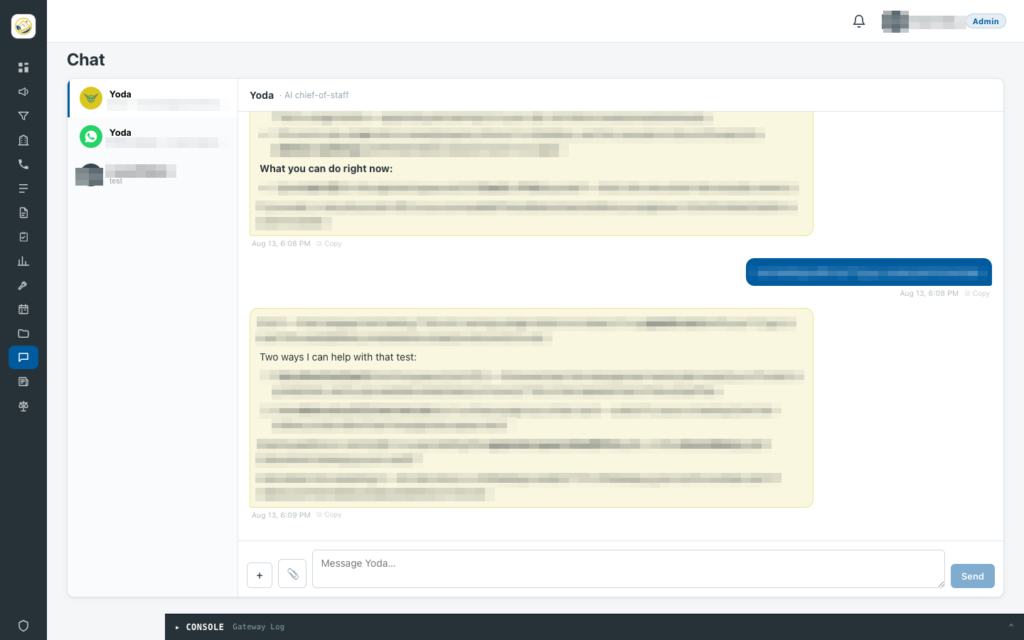
Yoda can retrieve information.
It can prepare documents.
It can calculate through predefined business logic.
It can summarize records.
It can identify what requires attention.
But certain actions remain human decisions.
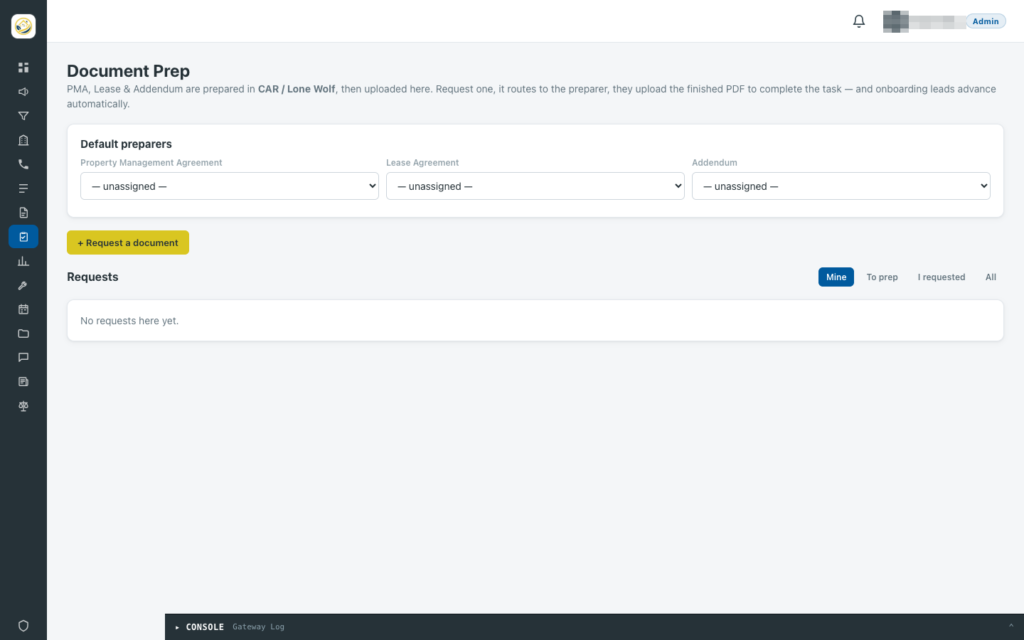
Management agreements and leases move through established CAR and Lone Wolf workflows. Legal documents can be prepared with AI assistance, but they are reviewed before being served or signed.
That architecture is intentional.
AI does the legwork. People retain the authority.
The Unexpected Result: Lower AI Costs
There was another benefit to moving so much repeatable work outside of the language model.
Cost dropped substantially.
Because Yoda no longer has to reason through every step of every process, many tasks require only a fraction of the AI processing they previously consumed.
Depending on the workflow, we’re now seeing costs roughly 10 to 25 percent of what the original approach required, while Yoda is simultaneously becoming far more capable.
That may sound backwards.
It isn’t.
The mistake is assuming that making an AI system more powerful means giving the AI more responsibility.
In this case, the opposite was true.
We made the surrounding software smarter so the AI could do less unnecessary thinking.
From Chatbot to Chief of Staff
The original request was to make an AI generate documents.
Three weeks later, we were building the beginnings of an operating system for the property management company.
And we’re not finished.
The dashboard is designed around a growing library of tools and automations. As we identify another repetitive process, another information bottleneck, or another place where something can fall through the cracks, we can build that capability into the system.
Employees gain another tool.
Yoda gains another lever.
The business gains another standardized process.
That is where I think practical business AI becomes genuinely interesting.
The future is not a chatbot sitting in the corner waiting for someone to ask it a question.
It is an intelligent layer sitting on top of well-designed business systems, capable of understanding what you want while deterministic software handles the work that should never have been left to interpretation in the first place.
After 12 years of helping this client build the technology behind his businesses, this feels like the natural next step.
Not replacing the people who run the company.
Giving them, and the AI working alongside them, a better command center from which to run it.